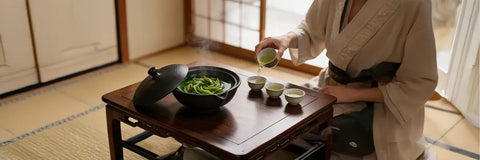
El kanji shiboridashi , escrito como 絞り出し, significa "exprimir y verter", una referencia directa a cómo el recipiente extrae y sirve el té.
La mayoría de los nombres de utensilios para el té en japonés son geográficos o estilísticos. El shiboridashi es diferente. Su nombre es una instrucción directa compuesta por dos verbos de acción, y leer atentamente esos verbos cambia la forma en que se entiende el recipiente en sí.
Este artículo desglosa cada carácter del kanji shiboridashi , explica el significado de los verbos tanto en el lenguaje como en la práctica, y muestra por qué se eligió ese nombre para este diseño en particular.
Si elaboras gyokuro o sencha de alta calidad y quieres comprender mejor la herramienta que tienes en tus manos, este es el lugar para empezar.
Kanji Shiboridashi : 迫出 Escrito en japonés

El kanji shiboridashi se escribe como 絞り出し en escritura japonesa estándar y significa literalmente "exprimir y verter", describiendo el estilo de elaboración de cerveza centrado en la extracción que caracteriza a este recipiente.
La forma escrita completa, 迫出急須 ( shiboridashi kyuusu), se traduce libremente como "tetera de vertido por presión". La parte "kyuusu" simplemente significa tetera, por lo que "迫出" transmite todo el significado descriptivo por sí sola.
Cuando veas esto escrito en utensilios de té o en literatura sobre el té, estarás leyendo un verbo compuesto convertido en sustantivo. La acción implícita en el nombre es la función del objeto mismo.
¿Qué significan realmente los caracteres de Shiboridashi
El kanji shiboridashi se construye a partir de dos verbos distintos unidos. Comprender cada uno por separado hace que el nombre compuesto sea mucho más preciso.
El significado de Shiboru: Apretar o retorcer
El primer carácter, 絞 (shiboru), significa exprimir, retorcer o presionar. En japonés cotidiano, describe el acto físico de exprimir, como retorcer el agua de una tela. Transmite la idea de aplicar una presión deliberada para extraer hasta la última gota.
Aplicado al té, shiboru describe la intención detrás del método de preparación. Al inclinar un shiboridashi sobre una taza, no solo se vierte el agua, sino que se extrae el líquido de las hojas, obteniendo así la máxima concentración de sabor que el té puede ofrecer.
Este verbo es particularmente significativo para gyokuro . Gyokuro se prepara con muy poca agua en relación con la cantidad de hojas, y cada mililitro de este licor contiene un intenso umami y dulzor. Dejar líquido en la olla significa perder ese sabor. El nombre indica claramente que no se debe dejar.
El significado de Dashi: Verter o extraer
La segunda parte, 出し (dashi), proviene del verbo dasu, que significa verter, extraer o sacar. Dashi, por sí solo, es también la palabra japonesa para el caldo base de la cocina japonesa, elaborado extrayendo el sabor del kombu y el bonito. Esta raíz común no es casual. Ambas se refieren a extraer el sabor esencial mediante un método cuidadoso.
En el contexto del kanji shiboridashi , dashi se refiere a la acción de verter y a la idea misma de extracción. No se trata simplemente de vaciar la tetera, sino de extraer la esencia de la hoja y verterla en la taza.
En conjunto, shiboru y dashi forman un compuesto que significa "exprimir y verter". Ese compuesto se convierte en el nombre de un recipiente para elaborar cerveza cuyo diseño existe precisamente para hacer eso.
Cómo el nombre Shiboridashi refleja su estilo de elaboración de cerveza.

La tetera shiboridashi es pequeña, plana y sin asa. En la mayoría de las versiones tradicionales, tiene una capacidad de entre 60 y 150 mililitros y carece de colador interior; la tapa está inclinada para actuar como filtro al servir.
Ese diseño es la materialización del nombre. Debido a su pequeño volumen y a la alta proporción de hojas y agua, la infusión resulta extremadamente concentrada. El maestro cervecero inclina la olla lentamente y mantiene la posición hasta que cae la última gota. Esto es shiboru hecho realidad.
La tapa descansa directamente sobre las paredes internas del recipiente, en lugar de sobre un borde moldeado. Esto permite al cervecero controlar el espacio que queda en el pico, lo que a su vez controla la velocidad del vertido. Un vertido lento, mantenido hasta que la cafetera se vacíe por completo, extrae el máximo sabor, que es el verdadero significado de 絞り出し en la práctica.
Gyokuro elaborado a unos 50 o 60 grados Celsius, produce un licor espeso y rico en umami que se debilita notablemente si queda incluso una pequeña cantidad en la olla. El kanji shiboridashi plasma esta idea en el nombre de la herramienta.
La historia detrás del nombre Shiboridashi
La tetera shiboridashi está estrechamente ligada a la tradición senchado, el método japonés de preparación de té de hojas sueltas que se desarrolló paralelamente, pero de forma independiente, a la ceremonia matcha . El senchado ponía énfasis en la calidad de cada hoja y en la habilidad del preparador para extraer sus mejores cualidades.
Dentro de esa tradición, gyokuro se convirtió en el té de mayor prestigio, y los alfareros de Tokoname y otras regiones productoras de cerámica desarrollaron recipientes específicamente diseñados para su preparación. El diseño shiboridashi , con su forma plana y su boquilla con tapa, surgió como una herramienta especializada para los tés de alta calidad cultivados a la sombra.
El nombre 絞り出し se aplicó porque describía precisamente lo que distinguía a esta embarcación de un kyusu estándar. kyusu Contiene más agua, se vierte con facilidad y está diseñado para la comodidad diaria. El shiboridashi fue diseñado para la extracción intencionada, y su nombre refleja directamente esa distinción.
Tokoname shiboridashi La cerámica, producida en uno de los Seis Hornos Antiguos de Japón con una historia documentada que se remonta al período Heian, se convirtió en el origen más reconocido de este estilo de tetera, apreciada por la forma en que su arcilla rica en hierro interactúa con los taninos del té. Se dice que la arcilla rica en hierro de esa región interactúa con los taninos del té, suavizando ligeramente el amargor y redondeando el sabor de la infusión. Para aquellos que aprecian la artesanía de la cerámica Tokoname y desean explorarla más allá del formato shiboridashi , Nio Teas ofrece una Tokoname kyusu que traslada la misma tradición regional de la arcilla a un recipiente de vertido más convencional.
Por qué Shiboridashi se asoció con el té japonés de primera calidad.
La conexión entre la tetera shiboridashi y el té de alta calidad reside en el significado mismo shiboridashi . Un recipiente llamado «exprimir» nunca se concibió para bancha cotidiano o sencha informal. El nombre indica su propósito: esta herramienta es para tés que merecen ser extraídos hasta la última gota.
Gyokuro y kabusecha premium se sombrean antes de la cosecha, lo que aumenta su contenido L -teanina y reduce el amargor al tiempo que concentra cualidades de dulzura que los hacen candidatos ideales para gyokuro preparándose en un shiboridashidonde la extracción completa de cada gota es lo más importante.
Nio Teas ofrece una selección de tés gyokuro y de sombra de alta calidad que combinan bien con este estilo de preparación. Si tiene curiosidad por saber por dónde empezar, explore el Colección gyokuro es un primer paso natural.
El recipiente también se asoció con el té premium porque su pequeña capacidad exige atención. No se puede preparar una tetera de té shiboridashi de manera casual. El pequeño volumen, la temperatura precisa, el vertido lento, todo exige que quien lo prepara esté presente. Esa cualidad de atención se convirtió en parte de cómo se entendía culturalmente la tetera, no solo técnicamente. Para tés más vaporizados preparados a temperaturas ligeramente más altas, Tetera Tokoname fukamushi Ofrece un filtro de malla fina adecuado para las hojas más pequeñas y fragmentadas que produce fukamushi sencha .
Comprender Shiboridashi más allá de los kanji

Conocer el kanji shiboridashi te aporta más que una etimología. Te revela un principio de preparación. Al sostener la tetera sobre la taza e inclinarla lentamente, estás haciendo precisamente lo que su nombre indica: exprimir y verter.
Ese conocimiento también resulta útil al elegir un shiboridashi . El diseño sin asa no es una cuestión estética, sino funcional. La temperatura del agua para gyokuro es lo suficientemente baja como para que sujetar el cuenco directamente resulte cómodo. La ausencia de asa mantiene un diseño minimalista y prioriza el control y la sensación al tacto por encima de la comodidad.
La tetera shiboridashi a veces se compara con la Gaiwan chinoY las similitudes funcionales son reales. Ambos son recipientes pequeños con tapa y sin asas, diseñados para una preparación minuciosa. La diferencia clave radica en el pico vertedor: el shiboridashi , con su boquilla integrada, dirige el flujo con precisión, razón por la cual se le denomina "prensa de extracción rápida" y no al gaiwan.
El shiboridashi también se compara frecuentemente con el hohin , otro recipiente sin asa utilizado para tés japoneses de alta calidad., aunque ambos difieren significativamente en el diseño de su boquilla y en cómo se controla el líquido durante el vertido.
Para cualquiera que esté construyendo una práctica de té japonesa más intencional, desde entender qué significa shiboridashi en japonés hasta los caracteres individuales, hasta seleccionar el té adecuado. vajilla japonesa para el té Para respaldar esa práctica, el nombre no es meramente ornamental.