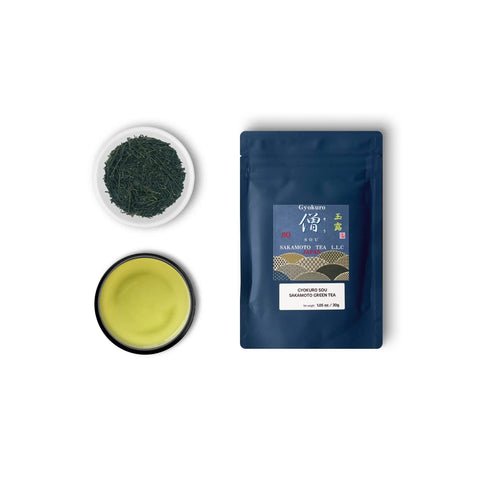
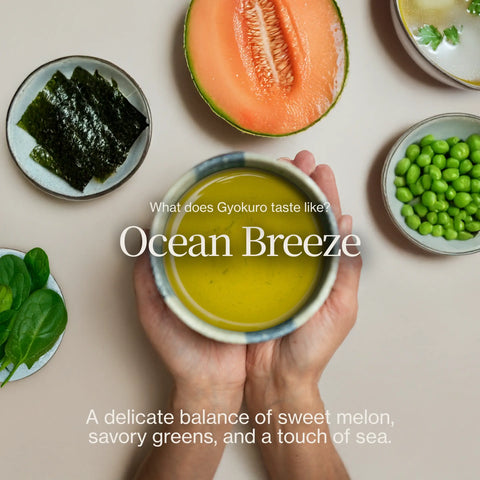
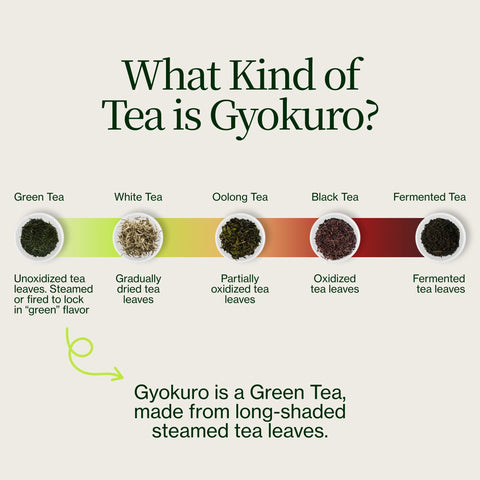
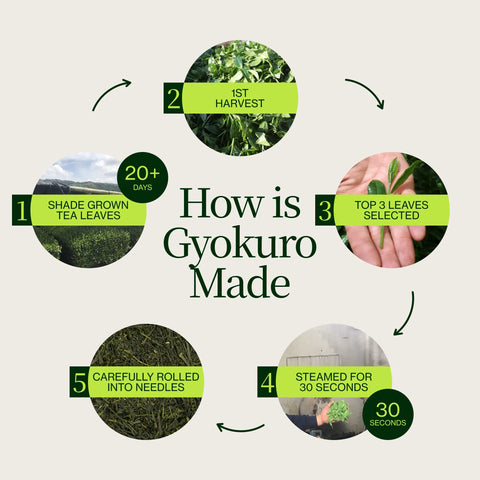
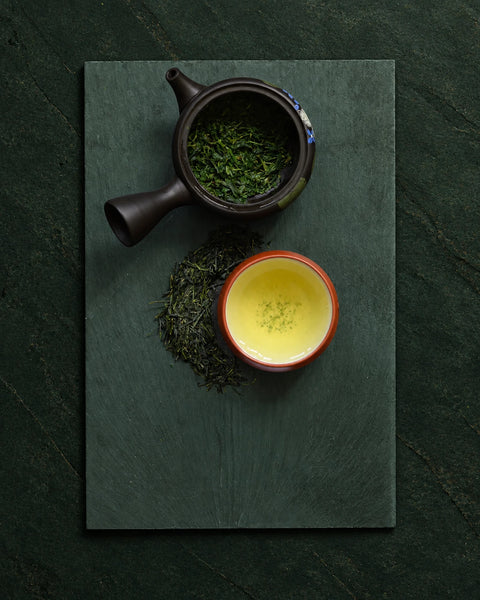
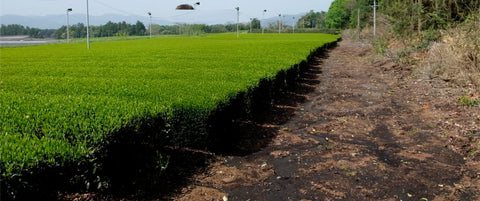
Gyokuro is grown in the dark. For around three weeks before harvest the bushes are covered with reed screens or black netting, cutting out most of the sunlight and leaving the plant with more theanine and fewer catechins. The result is Japan's sweetest, most savoury leaf tea: thick, almost broth-like, with a deep marine umami and very little bitterness. It has to be brewed accordingly — a generous amount of leaf, a small volume of water at a low temperature, and a patient steep. Treated that way it is less a refreshing drink than a concentrated one, and the later infusions, brewed hotter, open it back up.
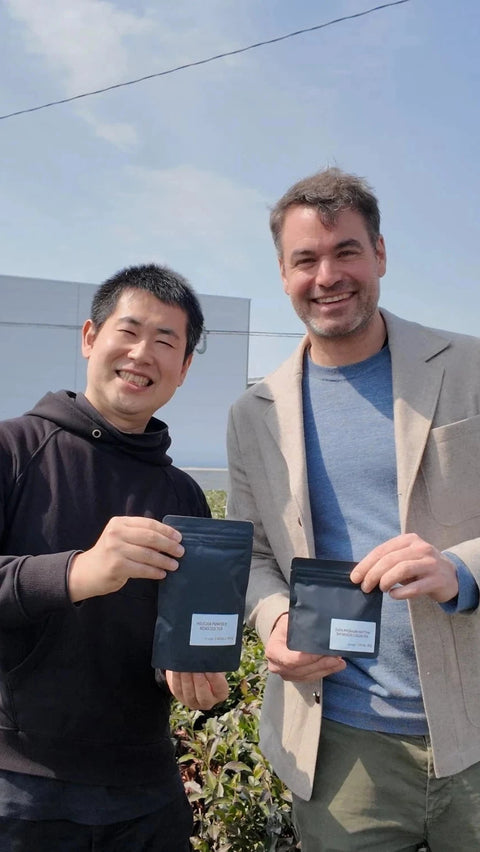
Artesano del té: Sr. SakamotoKagoshima
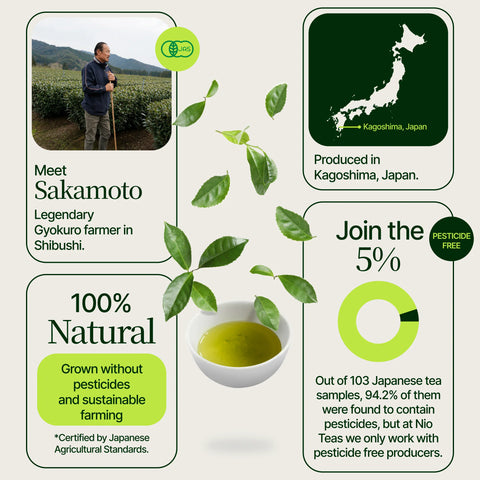
El Gyokuro Sou Sakamoto se produce en Shibushi , KagoshimaUna región bendecida con suelos volcánicos fértiles y aire puro. Aquí, Mr. Sakamoto ha perfeccionado su oficio durante décadas, convirtiéndose en uno de los pioneros más respetados de Japón en la producción gyokuro orgánico.
Al rechazar atajos e invertir en el enriquecimiento natural del suelo, cultiva plantas de té que prosperan sin productos químicos. Su dedicación da como resultado tés que no solo tienen un sabor excepcional, sino que también preservan la salud de la tierra y el ecosistema.
Con Gyokuro Sou SakamotoNo solo se saborea el té, sino también el resultado de toda una vida de innovación, cuidado y respeto por la naturaleza.
Origen: ShibushiJapón
El Gyokuro Sou Sakamotoproviene de los fértiles suelos volcánicos deShibushi en Kagoshima, una región famosa por producir los tés gyokuro más dulces y ricos de Japón. Sou fue diseñado por Mr. Sakamoto para resaltar la profundidad y la complejidad en capas, posibles gracias al clima subtropical de la zona y a su suelo rico en nutrientes.
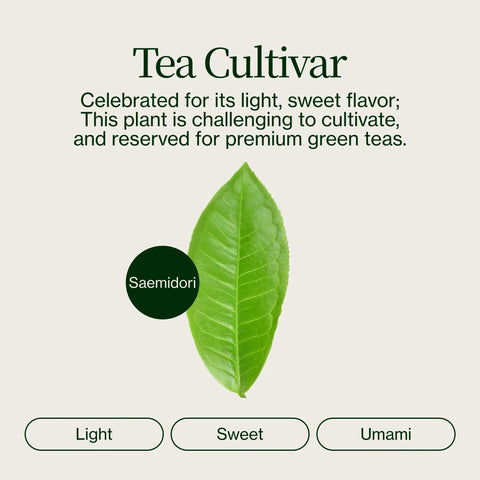
Cultivar: SaemidoriVariedad de té
Saemidori: Saemidori es una variedad muy apreciada en Japón, valorada por su sabor naturalmente suave y dulce. Produce un licor de un verde intenso y un umami delicado, menos astringente que otras variedades. Los agricultores aprecian Saemidori por su cosecha temprana, que les permite aprovechar los primeros nutrientes en plena primavera. Para gyokuro , esta variedad ofrece una dulzura refrescante con un sutil toque marino, lo que la hace especialmente adecuada para largos periodos de sombra.
Preparación y porcionesHasta 18 tazas
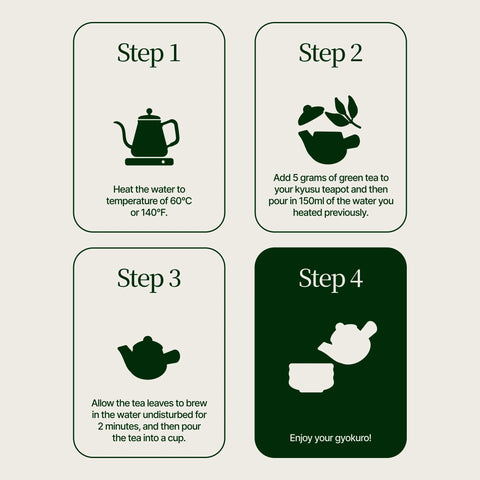
Café caliente: 5 g de hojas, 150 ml de agua a 60 °C (140 °F), 2 minutos.
Prepáralo de nuevo: Las mismas hojas dan para 3 infusiones. Vuelve a infusionar 2 veces más con agua a la misma temperatura, 30 segundos cada vez; cada infusión tiene un sabor ligeramente diferente.
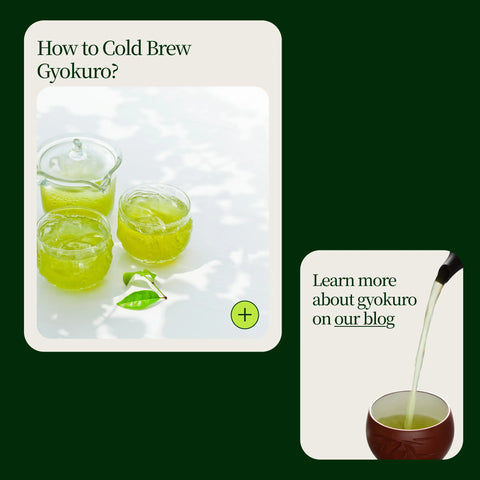
Café frío: Para darle un toque refrescante, Gyokuro Sou Sakamoto también funciona de maravilla como infusión fría. Deja reposar de 5 a 10 g de hojas en 500 ml de agua fría durante 3 a 6 horas y disfruta de una taza suave, dulce y refrescante.
Un paquete: Hasta 18 tazas · 6 porciones de 5 g, 3 infusiones cada una · 30 g / 1,1 oz.
¿Por qué elegir Nio Teas ?
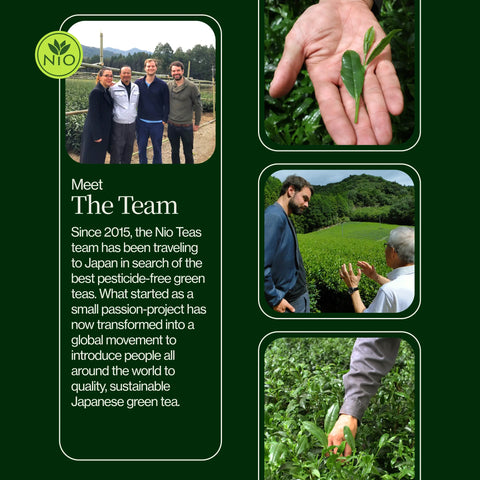
Para nosotros, el té es más que una bebida; es una forma de vida. Llevamos años visitando plantaciones de té por todo Japón, degustando tés con quienes los cultivan y forjando relaciones directas y duraderas. Creemos que esta es la manera más sostenible de obtener té: menos intermediarios, mayor trazabilidad y una conexión más cercana entre el agricultor y el consumidor.
Cada té es 100% libre de pesticidas y cuidadosamente seleccionado por su sabor, origen y elaboración artesanal. Tanto si estás descubriendo el té japonés como si comparas variedades y terruños, encontrarás notas de cata honestas, instrucciones precisas para su preparación y un apoyo real para que disfrutes al máximo de cada taza.
Valores típicos por 100 ml de té preparado, según las Tablas Estándar de Composición de Alimentos de Japón (MEXT, 8.ª edición), infusión gyokuro (alimento n.º 16034; 10 g de hojas, 60 ml de agua a 60 °C, 2,5 min). Los valores en su taza varían según el tipo de hoja, el agua y el tiempo de infusión.
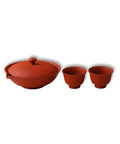
Completa tu ritual del téNo Kyusu or Shiboridashi at home? No problem!
100% libre de pesticidasDirectamente de los agricultoresPuro y sin mezclarTerroir de origen únicoCosecha en lotes pequeñosAuténtica artesanía japonesa
Unveiling Gyokuro's Superfood Power
•
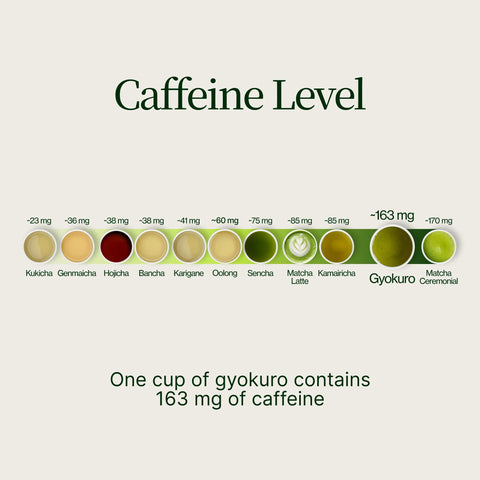
Cafeína
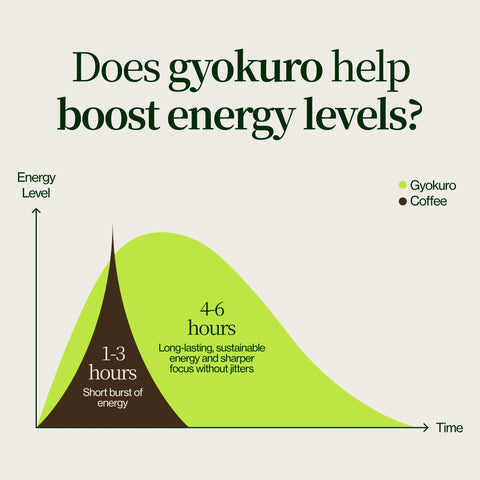
Cafeína natural para un estímulo suave y duradero.
•
Antioxidantes
Rico en catequinas y otros antioxidantes naturales.
•
Clorofila
Naturalmente rico en clorofila, el pigmento responsable del vibrante color verde del matcha .
•
Potasio y calcio
Minerales presentes de forma natural que contribuyen al perfil nutricional del matcha .
•
L -teanina
Un aminoácido que se encuentra de forma natural en el té y que se asocia con una sensación de calma y concentración.
•
Vitaminas A, C, E y K
Contiene una variedad de vitaminas presentes de forma natural en la hoja de té entera.
Why Buy Your Gyokuro from Nio Teas
Sin intermediarios, sin pesticidas, sin riesgos.
Garantía de satisfacción de 30 días
Pruébalo con confianza. Si no te convence, contáctanos en un plazo de 30 días.
15 productores de té japoneses
Nuestro té reúne la artesanía y la experiencia regional de 15 agricultores asociados de todo Japón.
Directamente del agricultor a la taza
Establecemos relaciones duraderas con nuestros agricultores para reducir el número de intermediarios y lograr una mayor trazabilidad.
100% libre de pesticidas Gyokuro
Every Gyokuro is grown without pesticides, then personally tasted and selected by our team.
How to Make Gyokuro Like a Pro
Gyokuro se disfruta mejor con temperaturas de agua más bajas y tiempos de infusión más prolongados, lo que permite que su dulzura y umami resalten sin amargor.
Heat the Water
Calentar el agua a 60 °C (140 °F).
Add the Leaves
Añade 5 g de hojas a un kyusu o shiboridashi .
Steep
Vierta 150 ml de agua y deje reposar durante 2 minutos.
Pour & Brew Again
Vierta hasta la última gota y luego prepare la infusión con las mismas hojas dos veces más (30 segundos cada vez).
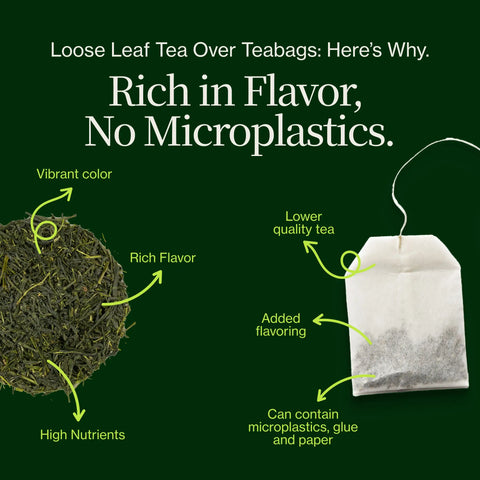
Té de hojas sueltas sobre bolsitas de té
Rico en sabor, sin microplásticos.
Legendary organic tea farmer in Shibushi.
Agricultor: Sakamotoさん
Mr. Sakamoto is a legendary organic green tea farmer in Shibushi, Kagoshima. Over decades in the tea industry he has found a sustainable way to make flavourful gyokuro and matcha without pesticides or chemicals, using an organic fertiliser he developed himself from organic compost and a sedimentary rock mulch.
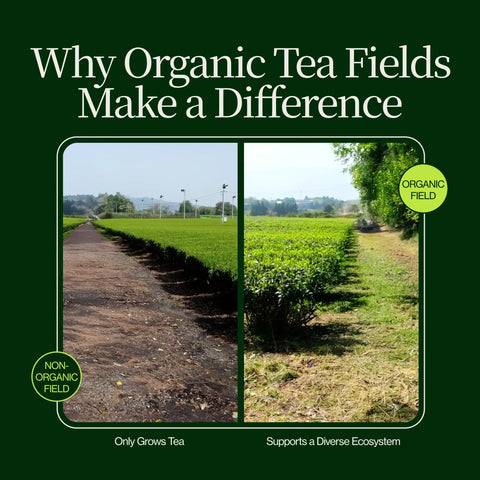
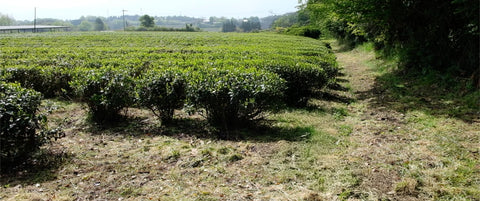
Why Organic Gyokuro Fields Make a Difference
Las plantas de té absorben todo del suelo, por lo que la agricultura sin pesticidas es especialmente importante. Los agricultores con los que trabajamos han encontrado una manera de cultivar un té delicioso sin dañar el ecosistema natural.
ORGÁNICO
PLAGUICIDAS
¡Nosotros también somos amantes del té, igual que tú!
Nio teas ha sido mi tienda favorita para comprar tés de buena calidad desde hace tiempo, y nunca me decepcionan. Sus tés son de excelente calidad; sin embargo, me gustaría destacar su servicio al cliente. El equipo de Nio siempre ha sido muy amable y servicial cuando he tenido algún problema. Su atención al cliente es impecable, responden con rapidez a todas las consultas, por eso soy un cliente fiel desde hace tiempo.
1 de abril de 2026
5 out of 5 stars
5/5
Sean
Mi proveedor favorito de tés verdes orgánicos japoneses a granel. Seleccionan algunos de los mejores tés orgánicos de Japón y apoyan a los agricultores familiares y a la creciente industria del té orgánico en general. Llevo años comprando a todos los proveedores y Nio siempre tiene los mejores precios y la mejor selección. Además, ofrecen un servicio al cliente excelente y envíos rápidos. ¡Muy recomendable! 🍃
Shipping is free once your order passes the threshold for your country — USD 54.99 · EUR 54.99 · GBP 44.99 · CHF 49.99 · CAD 74.99 · DKK 399 · SEK 599 · PLN 229 · CZK 1,290. Everywhere else it's the equivalent of USD 54.99, converted automatically. Below the threshold a flat rate applies, always shown at checkout before you pay.
We ship from warehouses in the US, the EU and Japan — whichever is closest to you. US and EU orders arrive in 4–12 business days; the handful of countries served from Japan take around 10. Business days count from dispatch rather than from when you order, and exclude weekends and public holidays. You'll get a tracking number by email the moment your parcel leaves the warehouse.
We only buy from fields grown without pesticides or chemicals. We ask each farmer directly how they manage their land, visit the plantation and processing facility ourselves, taste every harvest before committing, and check that the biodiversity around the fields is alive. Small family farms don't always carry paperwork — so we verify it in person instead.
Japanese green tea covers an enormous range, and choosing online isn't easy. If you've tried yours and it isn't for you, email info@nioteas.com within 30 days with your order number and a line on what you didn't enjoy. We'll send a different tea of equal or lower value, free. Nothing to post back — keep it, share it, or try brewing it cooler. Once per order.
Email info@nioteas.com within 30 days with your order number and a photo. We'll approve it, cover the return postage with a prepaid label or a reimbursement, and refund you — no restocking fee. Refunds go to your original payment method within 2 business days of the return reaching us; your bank may take another 5–20 to show it.
Unopened items in their original packaging can be returned within 30 days. Tea is sealed for hygiene, so opened packs can't come back — but the swap above covers exactly that situation. Return postage is yours unless the item arrived damaged, defective or incorrect.
Orders to the US and EU ship domestically from our local warehouse, so there's no customs charge and no duty. A small number of destinations are served from our Japan warehouse, where your own customs authority may apply import duty, VAT or a carrier handling fee on delivery. Those are set by your country, not by us. Ask before you order and we'll help you check.
I must admit: for the price point, I would never have tried this tea except for the fact that I got it for free as part of the anniversary sale. Nearly $50 for 30 grams of tea is a bit out of my price range. As such, this will become a special occasion tea for me, since gyokuros can be aged longer than senchas.
The aroma is deceptively mild, with classic sencha notes of steamed vegetables, but also hints of corn and sweet cream just under the surface. This isn't an extremely aromatic tea, but compensates for that by giving enjoyable complexity in the flavor.
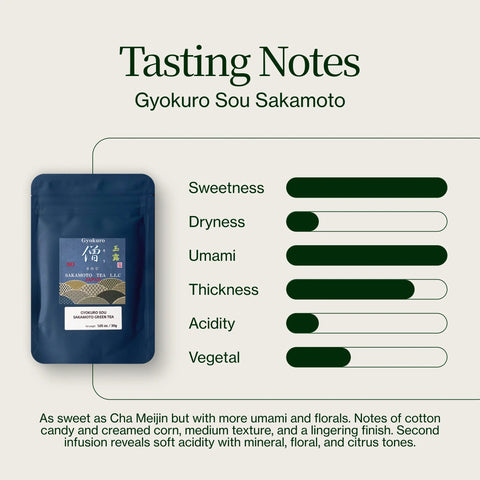
When you take your first sip, the mouthfeel gives some minerality and a thick, brothy texture that coats the tongue. It greets you with a brisk umami and a very mild bitterness that quickly fades into floral sweetness with a hint of sweet corn, then lingers as a mild rocky mineral aftertaste with recurring hints of vegetal umami. And when I say that aftertaste lingers, it REALLY lingers. I was still tasting it a solid 10 minutes after my first cup, and the aroma remained even longer, which is insane, I've never had a Japanese tea linger that long.
I highly recommend not only brewing this tea at very cool temperatures (as gyokuro should be), but I also recommend using much less water than usual as well. This allows the tea to have that stronger, syrupy texture and bold flavor.
If I had to compare it to anything, I'd say it's like a more umami version of the Cha Meijin, if you've been a Nio Teas customer for a while. My only real complaint is the price point. Again, $50 for 30 grams of tea is a bit on the excessive side. I understand gyokuros are more labor-intensive and are carefully blended, but in this economy, not too many people are going to be able to truly afford that price. If it were $40 or less, I could see myself repeat-buying because it's otherwise a very solid tea.
I’ve never had proper Japanese green tea before. Nio Teas has been a wonderful introduction. They added this Gyokuro as a gift and it really is something unique. It’s one of those things in life that keeps your attention because there is so much to explore every time you experience it. I enjoy those moments. Thanks guys!
Un te exquisito. Es de los más umamis que he probado. El sabor es intenso, delicado y con múltiples capas. De mis tés verdes favoritos, junto con el fukamushi sencha.
It isn’t anything you need to improve. I didn’t like the flavor. I guess I didn’t understand the flavor profile I studied your different teas for at least 3 months to get a better grasp of what I might want. This is all new to me. My first order of any green teas. I haven’t been able to give it a second chance. The taste didn’t agree with me! I will give it another chance. Too expensive not to try to acquire a taste for it. I thought since this was a more expensive tea it would have a better taste lol. I like the roasted Hojicha so much better!
When your samplers are back in stock I would love to try other flavors!
The first steeping could not have tasted better; perhaps my favorite green tea. However, the second steeping did not exceed the second steepings of other, less extraordinary teas.